Back to Trade & Logistics
Trade & Logistics

10 August 2026

Congestion fear as ‘unnavigable’ Rhine means cargo shift to road and rail

Downunder Voices Newsroom

Source reporting: The Loadstar

Congestion fear as ‘unnavigable’ Rhine means cargo shift to road and rail

Water levels along the Rhine are continuing to fall, as repeated heatwaves across Europe prolong drought, with shipping bosses now warning the river could effectively be being “split in two”, as carriers slap new surcharges on all modes. MSC announced on Friday it had introduced a wave of “traffic congestion surcharges” for rail, trucking, and rail-truck transport from/to Antwerp and Rotterdam via Andernach, Frankfurt, Germersheim Munich, Nurnberg, Neuss, Strasbourg, Trier, and ... The post Congestion fear as ‘unnavigable’ Rhine means cargo shift to road and rail appeared first on The Loadstar .

About this report

Downunder Voices provides an independently written summary and community perspective based on information published by the original source. The original publisher remains responsible for its reporting.

Join our community

Follow Downunder Voices

Join thousands of readers following news and community stories from Australia, New Zealand and the Pacific.
More from Trade & Logistics

View category

10 August 2026

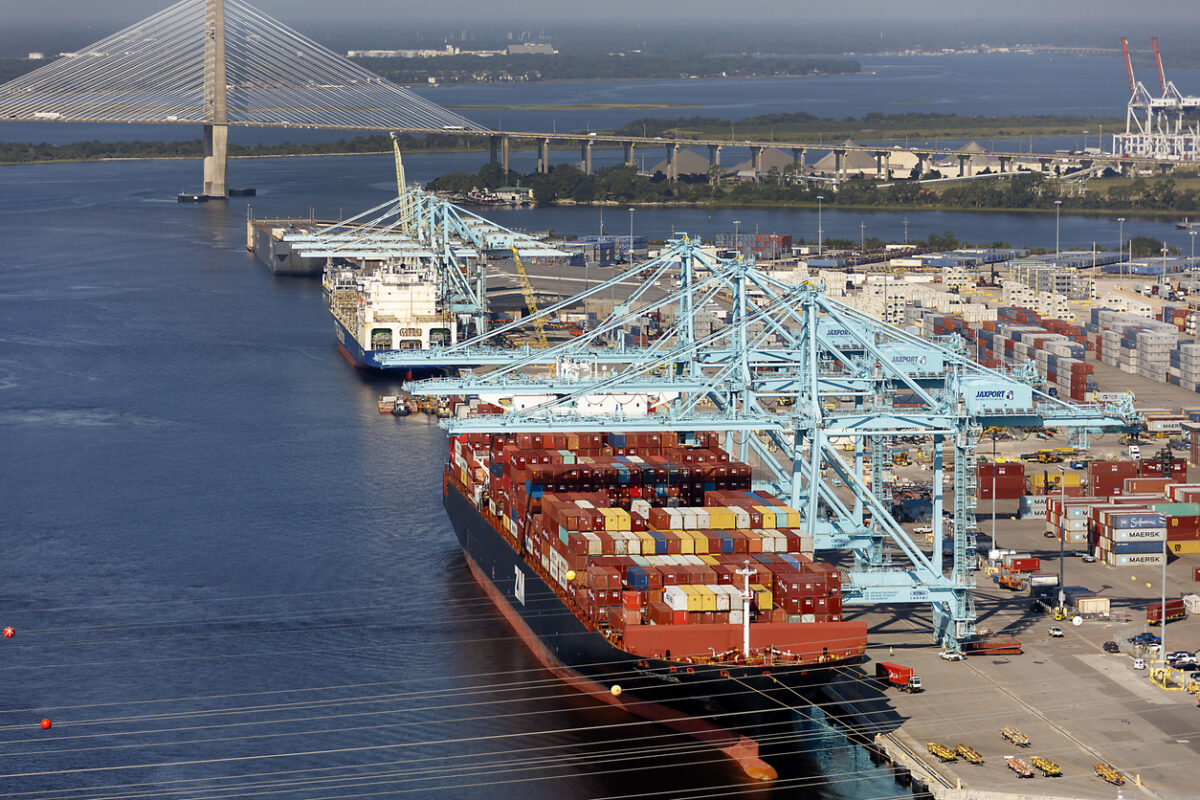
Jacksonville adds 8 million sq ft of warehouse space

Jacksonville has added around 8 million square feet of speculative industrial development over the past two years, according to a market update published by the Jacksonville Port Authority (JAXPORT) on 7 August. Around 2 million square feet of that space has been leased, leaving approximately 6 million square feet of speculative industrial capacity available on […] The post Jacksonville adds 8 million sq ft of warehouse space appeared first on Port Technology International .

Source: Port TechnologyOriginal source

10 August 2026

Interview with Peter Mantel, Chief Commercial Officer at Theyr: The Next Evolution of Voyage Optimisation

Artificial intelligence is becoming an increasingly important part of shipping, but according to Peter Mantel, Chief Commercial Officer at Theyr, the industry’s biggest challenge is not the technology itself. It is building trust in the systems, improving the quality of operational data and giving crews and operators the confidence to make better-informed decisions. In the latest episode of CN Talks , Antonia Saratsopoulou, Managing Editor of Container News, spoke with Mantel about the evolution of voyage optimisation, the limitations of traditional noon reporting, the growing importance of high-frequency vessel data and why the future of voyage planning lies in balancing operational, commercial and environmental priorities through explainable technology. Trust, not technology is the biggest challenge Mantel sees strong parallels between today’s adoption of AI-powered voyage optimisation and the maritime industry’s transition from paper charts to Electronic Chart Display and Information Systems (ECDIS). Although ECDIS offered clear operational and safety benefits, its adoption was gradual because mariners first needed to trust the technology.

Source: Container NewsOriginal source

10 August 2026

An open-source TMS: the machine room must be open

Today we have an op-ed by Newton Davis, co-founder of Janus, a fintech focused on shipment-level financial clarity for ocean & air freight forwarders, and Raoul Wintjes, head of international road haulage, air freight & digitalisation at DSLV, the Association for Freight Forwarding and Logistics Germany. Somewhere inside every freight forwarder’s operation is a system that almost no one outside the industry has heard of – and that almost no one ... The post An open-source TMS: the machine room must be open appeared first on The Loadstar .

Source: The LoadstarOriginal source

Read Next

View latest

10 August 2026

Weather tracker: Europe breaks more heat records as temperatures soar

Drought and wildfires intensify across continent, while tropical storms bring heavy rain and disruption to east Asia Europe live – latest updates High pressure has dominated central and eastern Europe in early August, breaking temperature records across the region. Austria recorded a high of 41. 2C (106. 2F), while Slovakia reached 42. 2C.

Source: The Guardian WorldOriginal source

10 August 2026

Uni-Asia doubles up on Japanese handysize newbuilds

Singapore-listed Uni-Asia Group has doubled its handysize newbuilding programme in Japan with a second 40,000 dwt bulker. The company has signed an agreement with Nihon Shipyard and an affiliate for the vessel, which will be built by Imabari Shipbuilding and delivered between the fourth quarter of 2029 and the first half of 2030. No price …

Source: Splash247Original source

10 August 2026

Shearwater wins two seismic projects offshore India

Norwegian offshore seismic vessel player Shearwater Geoservices has received two separate letters of award from India’s ONGC. Each represents a large offshore 3D seismic survey offshore India. Combined, the two projects add approximately 15 vessel months of backlog. The awards, which will utilise two of Shearwater’s high-capacity 3D vessels, include a nine-month project offshore India’s …

Source: Splash247Original source

10 August 2026

More Than Half the Homes in East Omaha Have Unsafe Lead Levels. That Doesn’t Mean the EPA Will Clean Them Up.

Omaha resident Natalie Thorpe’s 3-year-old tested high for lead as a baby. Thorpe’s yard has enough lead to be risky but not enough to qualify for government cleanup. Rebecca S. Gratz for ProPublica Despite hundreds of millions of dollars spent on environmental cleanup, more than half the yards in a section of Omaha, Nebraska, that used to surround a lead smelter still have enough contamination to cause high blood-lead levels in kids, according to tests by the Flatwater Free Press and ProPublica. The findings were consistent across the city’s older urban core — in the historically Black neighborhoods north of downtown, the predominantly Hispanic areas to the south and the more white and affluent areas in midtown.

Source: ProPublicaOriginal source